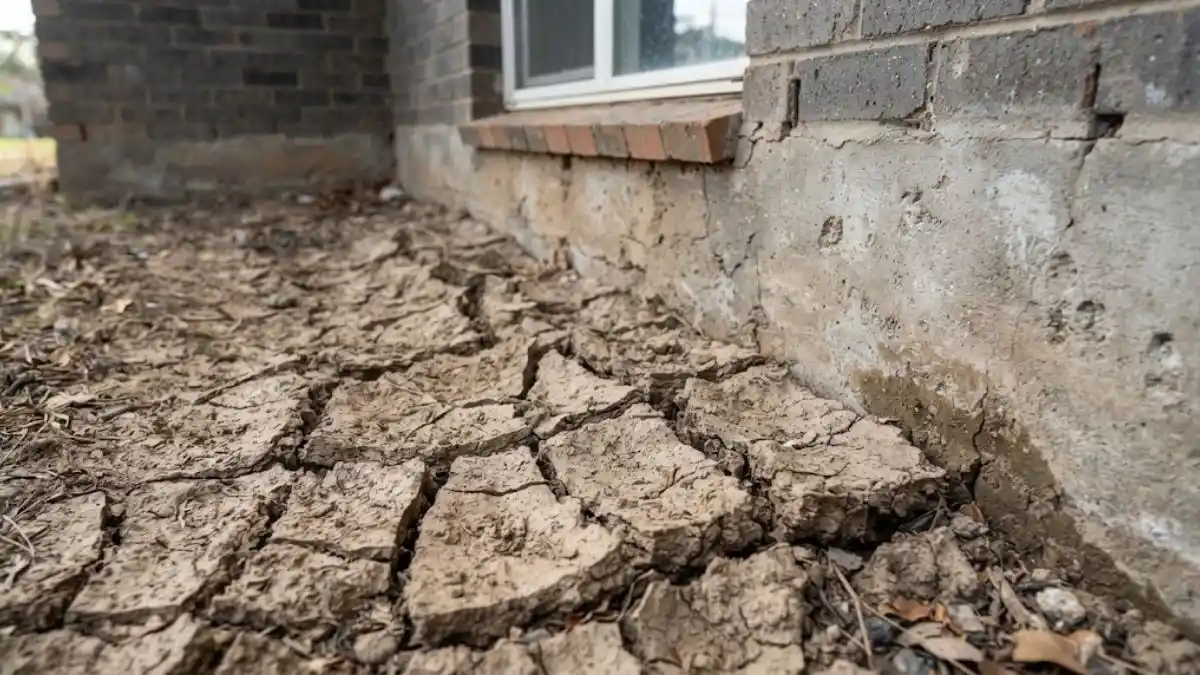
Parker sits on bentonite-rich expansive clay soil, a well-documented driver of foundation movement across Douglas County. Less discussed is what that same soil does to the pipes running underneath a home.
Parker sits on bentonite-rich expansive clay soil, a well-documented driver of foundation movement across Douglas County. Less discussed is what that same soil does to the pipes running underneath a home.
Bentonite clay swells dramatically when it absorbs moisture and contracts when it dries out. That cycle repeats with every wet season and every dry stretch, and it does not stop at the edge of the foundation, the same soil surrounds underground supply and sewer lines.
Geotechnical engineers measure a soil's expansion potential in a lab using a sample's swell percentage under controlled moisture conditions, then rate a site's risk from low to high. Douglas County geotechnical reports covering the I-25 corridor, which includes Parker, have documented this expansive potential extensively enough that it factors into standard foundation design for new construction in the area.
Rigid pipe joints are not designed to flex with repeated soil movement. Over years, that stress can work a joint loose or crack a connection, which is a common contributor to both slab leaks and underground line failures in Parker that have nothing to do with pipe age or material quality.
The same soil movement that stresses pipe joints is also the leading documented cause of foundation cracking in Parker's housing stock, and the two often show up together. A basement with a hairline foundation crack that widens seasonally is a reasonable candidate for nearby underground pipe stress as well, even if no leak has shown up yet.
A pipe failure that keeps happening in roughly the same area of a yard, or a slab leak in a home with otherwise sound plumbing, both point toward soil movement as a contributing factor rather than a one-off failure.
Since the soil itself cannot be changed, the more realistic approach is managing moisture around the foundation consistently, keeping grade sloped away from the house, gutters functioning, and irrigation not pooling near the foundation, which reduces the swing between wet and dry conditions that drives the worst of the movement.
You cannot change the soil, but a repair that accounts for it, sometimes rerouting a vulnerable run above the slab instead of just patching the break, addresses the underlying risk rather than just the symptom.
Even homes built to current geotechnical standards are not immune, since expansive soil design mitigates risk rather than eliminating it entirely. Post-tension slabs and engineered foundations reduce the likelihood of serious movement but do not remove the underlying soil behavior, which is why slab leaks still occur in Parker's newer subdivisions, just less frequently than in homes built before current standards were adopted.
Expansive clay movement tends to be most active during the transition between Parker's wetter spring months and drier summer stretches, when the soil is cycling through its widest swings in moisture content. Homeowners who notice new hairline cracks or a sticking door tend to see it most often during these transitional periods.
Normal foundation settlement happens gradually over a home's early years and then largely stops. Expansive clay movement is different because it can recur every year as moisture conditions cycle, which is why a home with this soil type sometimes needs ongoing monitoring rather than a single one-time fix.
Doors and windows that stick more in one season than another, hairline cracks that appear to widen and narrow across the year rather than staying fixed, and gaps that open and close at the base of interior trim are all patterns more consistent with expansive soil movement than with typical one-time settlement, and they are worth tracking with photos over a season rather than dismissing individually.
Expansive clay soil is documented across much of Douglas County and a wider stretch of the Front Range foothills transition zone, which means homeowners moving into Parker from a non-expansive-soil market elsewhere in the country are often encountering this specific risk factor for the first time and benefit from understanding it explicitly rather than assuming their prior home-maintenance experience fully applies here.
None of this means every Parker home is destined for pipe or foundation trouble, most never experience a serious issue, but understanding the mechanism behind expansive clay soil turns a vague sense that this is a regional quirk into a specific, actionable set of things to watch for and manage over the life of a home.
Living with expansive clay soil in Parker does not mean constant plumbing problems, most homes go years without a soil-related issue, but it does mean the risk profile is genuinely different from a home built on stable soil elsewhere, and budgeting mentally for the possibility of a slab leak or foundation crack repair at some point in ownership is a reasonable way to think about it.
For hands-on help with this in Castle Rock or the rest of Parker, our Slab Leak Repair and Leak Detection teams handle these calls regularly.
Call for a same-day quote.
Serving Parker and every neighborhood in it, plus Centennial, Castle Rock, Highlands Ranch, Castlewood, and Lone Tree.