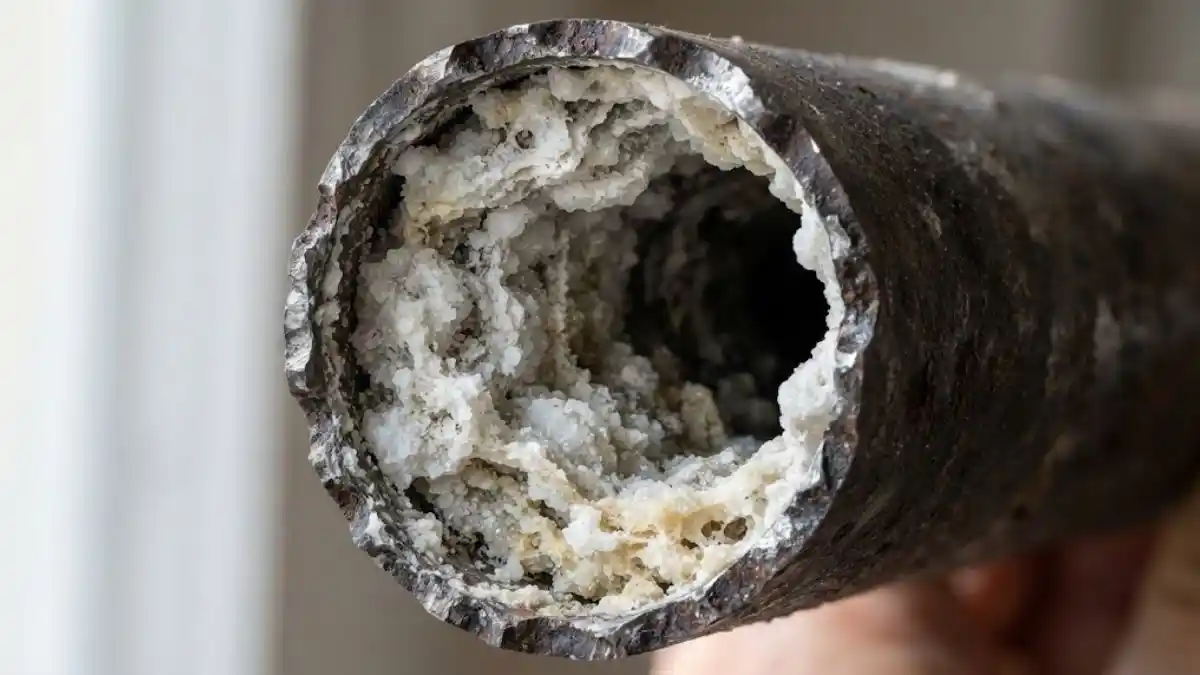
If a water heater in Parker seems to fail earlier than the same unit would somewhere else, the water itself is usually the reason. Parker's water measures in the 200 to 300-plus ppm range, well into hard-water territory, and that mineral load builds up inside a tank steadily from the day it is installed.
If a water heater in Parker seems to fail earlier than the same unit would somewhere else, the water itself is usually the reason. Parker's water measures in the 200 to 300-plus ppm range, well into hard-water territory, and that mineral load builds up inside a tank steadily from the day it is installed.
Every gallon that heats and cools inside the tank leaves behind a small amount of dissolved calcium and magnesium. Over months, that settles into a layer of sediment at the bottom of the tank. The layer insulates the burner or lower heating element from the water above it, which means the unit has to work harder and longer to reach the same temperature.
A lot of homeowners assume the popping or rumbling sound an aging water heater makes is just normal aging. It is actually water boiling and forcing steam bubbles up through that sediment crust. The noise is a direct sign of buildup, not an inevitable part of getting older.
You do not need to guess whether your home is affected. A simple test strip, available at most hardware stores, gives a rough hardness reading from a sample taken at any faucet. If you would rather have it measured precisely, a technician can test hardness during a service call and compare it against Parker's documented 200-300 ppm range so you know exactly what your system is dealing with.
A tank that gets flushed on a regular schedule, roughly once a year in a hard-water market like Parker, holds up meaningfully longer than one that never does. Flushing clears the sediment layer before it hardens into a scale crust that is much harder to remove. The process itself takes less than an hour and involves draining a portion of the tank through the drain valve until the water runs clear.
The same minerals scaling a tank are also building up inside dishwashers, coffee makers, and washing machines. A whole-home softening system addresses all of it at once at the main line, rather than treating the water heater as an isolated problem while every other appliance in the house fights the same mineral load.
For context, water is generally considered hard above 120 ppm and very hard above 180 ppm. Parker's 200 to 300-plus ppm range puts it well past that very-hard threshold, closer to what you would see in parts of the Southwest than in a soft-water region like the Pacific Northwest. That is part of why maintenance intervals that work fine elsewhere fall short here.
Once a tank has gone years without a flush, the sediment can bond to the tank wall in a way that a simple flush will not fully clear. At that point, especially on a unit already past 10 years old, replacement with proper sizing usually makes more financial sense than continuing to chase symptoms. A technician can tell you honestly which side of that line your unit falls on.
Softened water entering the tank carries almost none of the calcium and magnesium that forms sediment in the first place, which means a softened-water household can often stretch flush intervals further and see less efficiency loss between services. It does not eliminate maintenance entirely, but it changes the math on how forgiving the schedule can be.
Beyond the popping sound, reduced hot water output for the same size household, a pilot light or burner that seems to run longer than it used to, and water that takes noticeably longer to reach temperature are all signs the sediment layer has grown thick enough to be affecting performance, not just making noise.
A visit prompted by hard-water symptoms typically includes checking the anode rod, a sacrificial metal rod inside the tank designed to corrode instead of the tank itself, since hard water can accelerate anode consumption too. A depleted anode rod left unreplaced shortens tank life independently of the sediment issue.
Tankless water heaters are not immune to Parker's mineral content, they scale differently than a tank does, building deposits on the heat exchanger rather than settling as sediment at the bottom. Manufacturers of tankless units typically recommend annual descaling in hard-water markets, and skipping that maintenance in a market like Parker tends to shorten the unit's realistic service life more noticeably than it would in a soft-water area.
Because the consequences of skipped hard-water maintenance build up slowly and are easy to put off, setting an annual reminder tied to a fixed date, rather than waiting for a symptom to prompt action, is the most reliable way most Parker households actually keep up with flushing or descaling before real damage accumulates.
For hands-on help with this in Castle Rock or the rest of Parker, our Emergency Water Heater Repair and Water Filtration System Installation teams handle these calls regularly.
Call for a same-day quote.
Serving Parker and every neighborhood in it, plus Centennial, Castle Rock, Highlands Ranch, Castlewood, and Lone Tree.