Parker's water supply has a more interesting backstory than most towns, tied directly to a decades-long legal fight over water rights that reached the Colorado Supreme Court.
Parker's water supply has a more interesting backstory than most towns, tied directly to a decades-long legal fight over water rights that reached the Colorado Supreme Court.
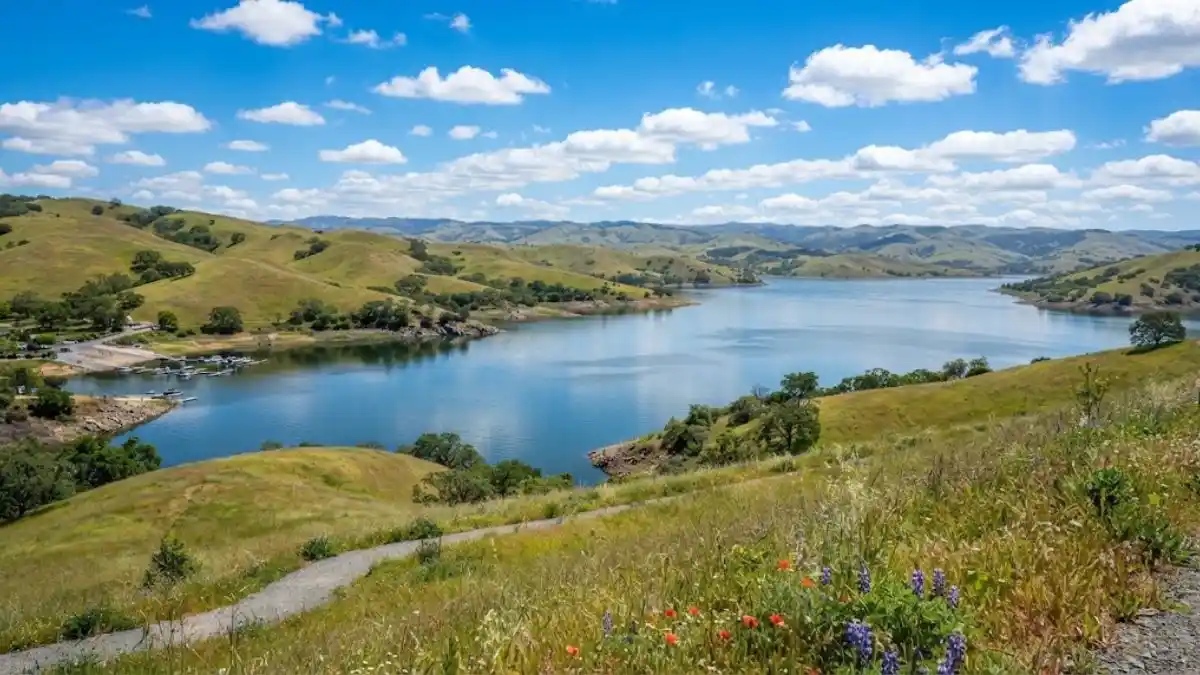
The Rueter-Hess Reservoir, developed by Parker Water and Sanitation District, followed a real, decades-long legal dispute with the state over water rights, including two trips to the Colorado Court of Appeals and Supreme Court in 1993. It stands today as Parker's major regional water-storage project.
Rueter-Hess functions as a storage reservoir rather than a source itself, capturing and holding water from multiple sources so it is available during peak demand periods and dry stretches, rather than relying solely on real-time aquifer withdrawal. That storage capacity is part of what let Parker keep growing without outpacing its water supply.
Parker Water and Sanitation District, not the town government, is the primary local water and sanitation authority. PWSD's enforcement authority even extends to filing complaints with local police or the sheriff over unauthorized valve operation, an unusual but real regulatory detail.
Parker's population grew from 285 residents at incorporation in 1981 to over 60,000 within four decades, among the fastest growth rates of any Colorado town in that period. A water storage project on the scale of Rueter-Hess was, by PWSD's own account, part of what made supporting that growth possible without straining the aquifer sources beyond sustainable withdrawal rates.
Understanding that PWSD, not the town, manages water supply and pressure helps explain why some infrastructure questions or outage notices come through a different channel than typical town services.
The mineral content in Parker's water, generally 200 to 300-plus ppm, comes from the Front Range aquifer sources PWSD draws on, distinct in origin from a limestone-aquifer hard-water market but similar in its effect on fixtures and water heaters.
As Parker continues to grow, the balance between Rueter-Hess storage capacity and demand will likely keep shaping local water policy, but for individual homeowners the practical takeaway stays the same, the water itself is hard, sourced regionally, and worth planning fixtures and appliances around rather than treating as a temporary condition.
PWSD's authority to involve local law enforcement over unauthorized valve operation is a reminder that, unlike some utilities, this is treated as a serious infrastructure protection matter, not just a billing relationship. It reflects how much planning and legal effort went into securing the district's water rights in the first place.
Parker's approach, building dedicated long-term storage rather than relying solely on real-time aquifer withdrawal, is not universal across Colorado Front Range communities, some of which lean more heavily on annual aquifer draw. That difference is part of why PWSD pursued the reservoir project as aggressively as it did through the legal process.
Because the system works reliably day to day, most Parker homeowners never have reason to think about where their water comes from. It becomes relevant mainly in two contexts, an unusual district notice or valve issue, and understanding why the water itself carries the mineral content it does.
The 1993 Colorado Supreme Court proceedings that helped clear the way for Rueter-Hess set precedent that continues to inform how Front Range municipalities approach large-scale water storage and rights disputes, making Parker's water history a reference point beyond just the town itself within Colorado water law circles.
Continued residential and commercial growth along the Parker Road corridor depends in part on PWSD's ability to keep supply ahead of demand, which is one of the practical reasons the reservoir project was pursued at the scale it was, well beyond what the town's population at the time of construction would have needed on its own.
Few homeowners moving to Parker realize their water supply has this specific legal and infrastructure history behind it, but it is a genuinely useful piece of context for understanding both why the water is hard and why the district treats its infrastructure protections as seriously as it does.
If you are new to Parker, the practical summary is simple, the water is reliable and well managed by a district that fought hard to secure it, it is also genuinely hard, and planning your water heater and appliance choices around that second fact will save more hassle than the reservoir history itself ever will.
For hands-on help with this in Castlewood or the rest of Parker, our Water Filtration System Installation and Water Heater Installation teams handle these calls regularly.
Call for a same-day quote.
Serving Parker and every neighborhood in it, plus Centennial, Castle Rock, Highlands Ranch, Castlewood, and Lone Tree.