A slab leak rarely announces itself right away. It usually shows up first as something small and easy to dismiss, before it becomes a visible problem.
If one section of flooring feels noticeably warmer than the rest of the room, with no obvious source like sunlight or a heating vent, that can indicate a hot water line leaking underneath the slab.
With every fixture and appliance off, walk near the water meter. If it is still moving, water is going somewhere in the system, and a slab leak is one of the more common culprits in Parker given the area's expansive clay soil.
A water bill that jumps without any change in household habits is often the earliest measurable sign, appearing well before any visible symptom shows up on the floor or walls.
If the leak is on the hot water side, the water heater is working harder to keep replacing lost hot water, which can show up as a smaller but noticeable increase on the electric or gas bill alongside the water bill. Seeing both move together strengthens the case for a hot-side slab leak specifically.
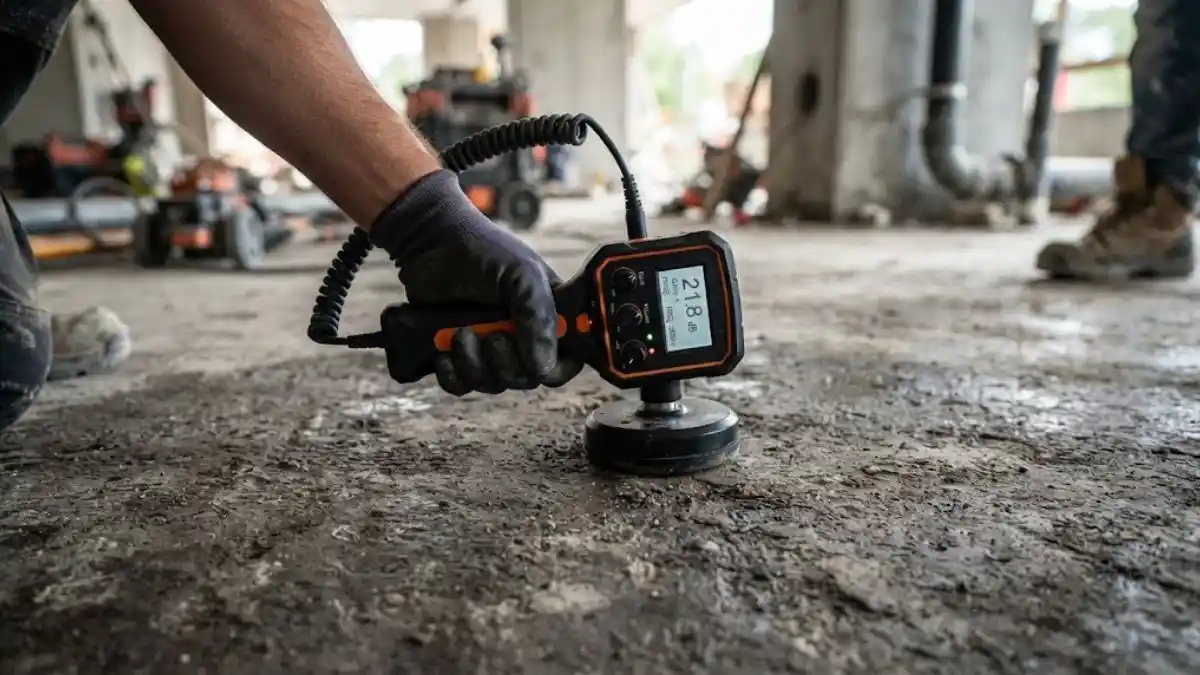
Rather than guessing at a location and cutting into the floor, electronic leak detection equipment traces the sound and thermal signature of moving water under the slab to pinpoint the leak within a small radius. That step keeps any necessary repair access targeted instead of exploratory.
By the time cracks appear in flooring, tile, or nearby baseboards, water has usually been undermining the slab for a while. Electronic leak detection before that point keeps both the damage and the repair scope smaller.
Beyond the wasted water itself, a slab leak left running can gradually erode the soil supporting the slab, which over time contributes to the same kind of cracking and settling that expansive clay causes on its own. Left long enough, the two problems start reinforcing each other.
A persistent musty smell in a room with no visible moisture can indicate water accumulating somewhere in the slab or subfloor that has not yet surfaced enough to see or feel. It is one of the less obvious signs but worth taking seriously, especially paired with any of the more direct indicators.
The difference between a repair that opens a small, precisely located section of slab and one that has to search blindly across a wider area is significant, both in cost and in disruption to flooring and finished space. This is the core reason detection technology exists as a distinct step rather than skipping straight to repair.
Once the leak location is confirmed, the repair approach depends on what is accessible, sometimes the damaged section of pipe under the slab is accessed directly and repaired in place, and sometimes it makes more sense to abandon that section and reroute the line above the slab instead, avoiding concrete work entirely.
It is rare for every sign described here to appear together, most homeowners notice one or two, a warm spot or an unexplained bill increase, well before flooring cracks or visible water shows up. Acting on the earlier, subtler signs rather than waiting for confirmation from a later-stage sign keeps both the damage and the eventual repair cost smaller.
Because expansive clay soil movement is an ongoing condition rather than a one-time event, a home that has had one slab leak carries a somewhat elevated likelihood of another developing in a different section over the following years. That is part of why we check the broader system, not just the immediate leak, during a repair visit.
No single sign here is proof on its own, but two or more appearing around the same time, a warm floor spot alongside a rising bill, or a sound of running water alongside a small crack, moves a slab leak from possible to likely, and is a reasonable point to call for detection rather than continuing to watch and wait.
Even without a clear sign, a home that has had one prior slab leak, or sits in a neighborhood with known expansive soil issues, can reasonably justify a periodic detection check simply as preventive monitoring rather than waiting for a specific symptom to prompt the call.
For hands-on help with this in Highlands Ranch or the rest of Parker, our Leak Detection and Slab Leak Repair teams handle these calls regularly.
Call for a same-day quote.
Serving Parker and every neighborhood in it, plus Centennial, Castle Rock, Highlands Ranch, Castlewood, and Lone Tree.