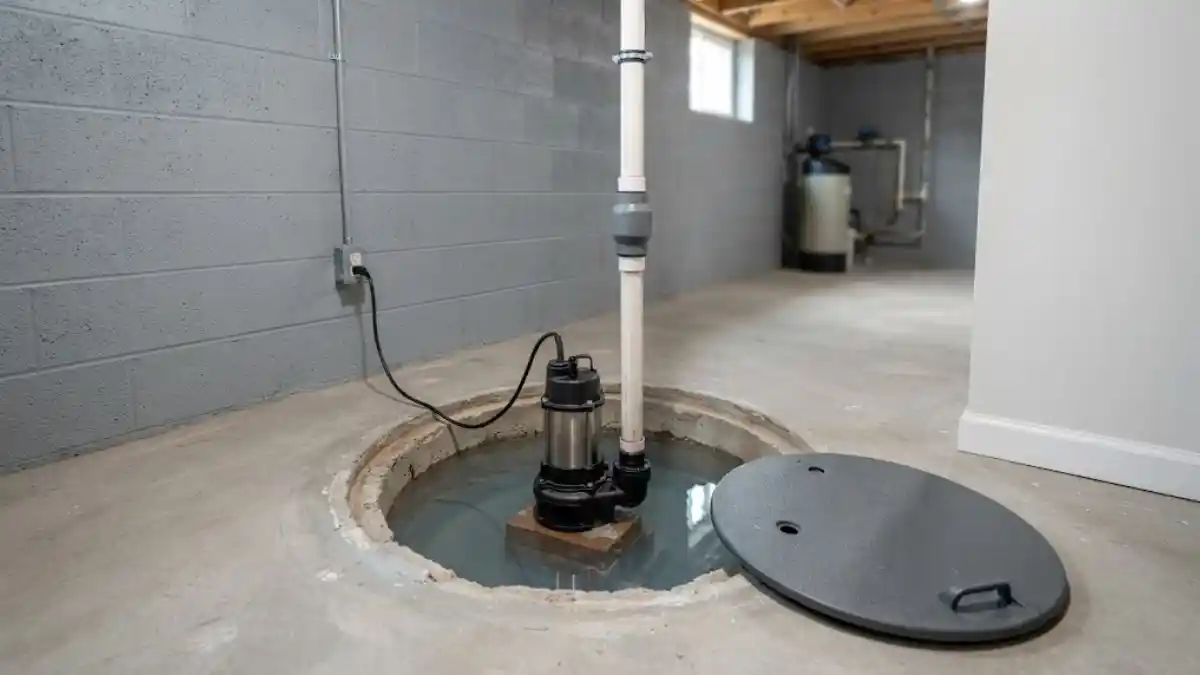
Parker's severe storm season runs roughly May through September, driven by the Palmer Divide hail corridor and the flash-flood rainfall that comes with it. A sump pump that has not been checked since last year is a real gamble heading into that window.
Parker's severe storm season runs roughly May through September, driven by the Palmer Divide hail corridor and the flash-flood rainfall that comes with it. A sump pump that has not been checked since last year is a real gamble heading into that window.
Pour a bucket of water into the sump basin and confirm the pump activates, moves the water, and shuts back off cleanly. If it hesitates, runs continuously, or does not trigger at all, that is worth addressing before the first real storm, not after.
Confirm the discharge line routes water well away from the foundation, not just a few feet from the house where it can seep right back toward the basement. A common mistake is a discharge point that dumps water into a low spot in the yard that drains right back toward the foundation during heavy rain.
A primary pump handles day-to-day groundwater intrusion and typical storm events. A battery backup pump is a second, independent unit that activates specifically when the primary fails or loses power, which is common during the same severe storms that cause flooding in the first place. The two work as a pair, not as interchangeable options.
Colorado storms severe enough to cause flooding frequently also cause power outages, which is the exact moment a primary pump with no backup becomes useless. A battery backup system covers that gap.
Most sump pumps run 7 to 10 years before failure risk climbs. If the unit predates that window and has never been replaced, a proactive swap ahead of storm season is cheaper than an emergency call during one.
Beyond the pour test, check that the basin itself is free of debris that could clog the intake screen, confirm the check valve is preventing water from flowing back into the basin after the pump shuts off, and listen for any grinding or straining sound that suggests the motor is nearing the end of its service life.
If your home experiences a power outage during storm season, even a brief one, it is worth manually testing the sump pump afterward rather than assuming it picked back up normally. Power fluctuations can occasionally affect a pump's control components in ways that are not obvious until the next time it needs to run.
A pour test confirms the pump activates, but it does not fully assess motor wear, float switch calibration, or check valve condition the way a professional inspection does. For a pump nearing the end of its typical service life, a professional check ahead of storm season catches issues the basic test would miss.
Testing the pump makes the most sense as part of a broader pre-storm-season check that also includes grading, gutters, and window wells, since a sump pump is the last line of defense, not the only one, against basement water intrusion.
A pump that fails a pour test should not be left as-is until storm season arrives on its own timeline. Scheduling a repair or replacement as soon as the failure is confirmed, rather than during the first storm of the season when demand for emergency service is highest, gets the work done faster and often at a lower cost.
A water-level alarm installed in the sump basin provides an added layer of warning if the pump falls behind during an unusually heavy storm, alerting the household before water actually overtops the basin. It is a relatively inexpensive addition worth considering alongside the pump itself, particularly for homes in the older subdivisions discussed earlier in this guide.
Treat the pour test, discharge line check, basin cleaning, and battery backup confirmation as one combined spring ritual rather than separate tasks tackled at different times, since doing them together takes under half an hour and means storm season arrives with the whole system already verified, not just part of it.
A half-hour spring check is a tiny time investment compared to the cost and disruption of a flooded basement discovered mid-storm, which is the real reason this checklist is worth treating as a fixed annual habit rather than something to get to eventually, not just a task for the years when a bad storm already feels likely.
For hands-on help with this in Castlewood or the rest of Parker, our Emergency Sump Pump Repair and Water Mitigation teams handle these calls regularly.
Call for a same-day quote.
Serving Parker and every neighborhood in it, plus Centennial, Castle Rock, Highlands Ranch, Castlewood, and Lone Tree.