Most of Parker proper is served by Parker Water and Sanitation District, but properties on the unincorporated fringe of Douglas County still depend on private wells, and that comes with a different set of maintenance considerations.
Most of Parker proper is served by Parker Water and Sanitation District, but properties on the unincorporated fringe of Douglas County still depend on private wells, and that comes with a different set of maintenance considerations.
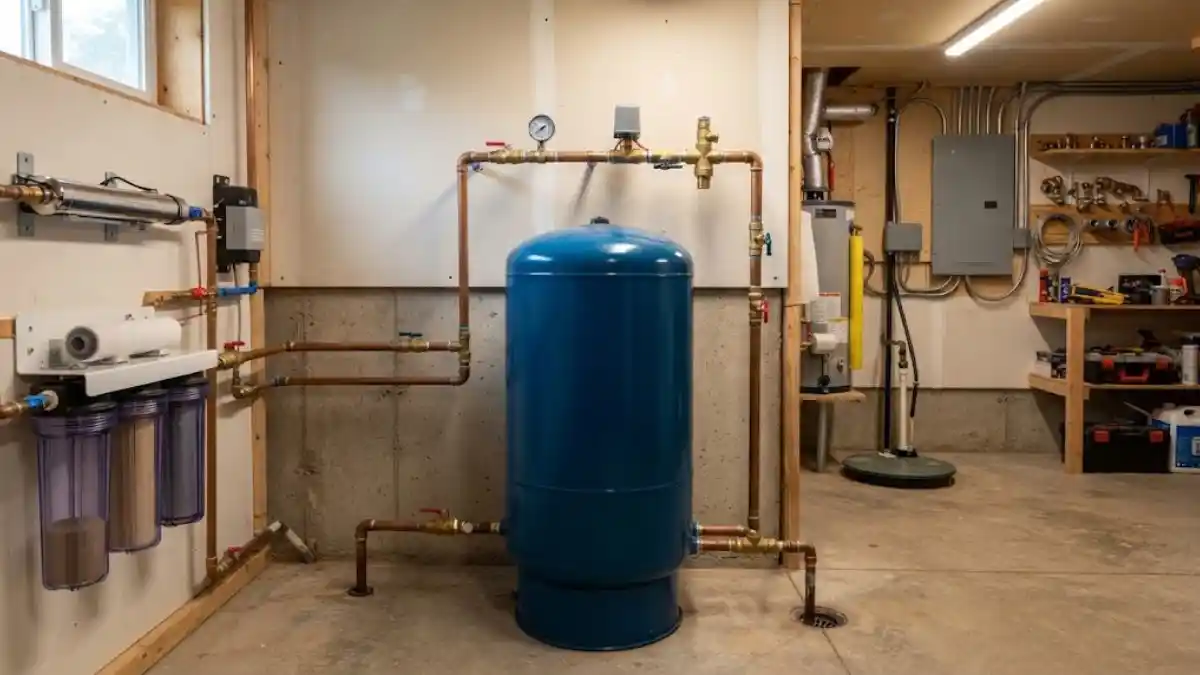
A municipal system provides a consistent pressure buffer through the district's own infrastructure. A well system relies entirely on the home's own pump and pressure tank, which means a failure there has an immediate, direct effect on water availability.
Pressure that cycles rapidly on and off usually points to a waterlogged pressure tank or a failing switch, both less expensive fixes than a full pump replacement. Sputtering or air in the lines can indicate a pump drawing air, sometimes from a low water table.
Well water quality is not regulated the same way municipal supply is, which puts responsibility for testing on the property owner. Common tests check for bacteria, nitrates, and mineral content, and annual testing is a reasonable baseline even without an obvious problem, more frequent if the well is used for drinking water by a household with young children or anyone with a compromised immune system.
A well system has no monthly water bill, but it carries the full cost of pump maintenance, periodic testing, and eventual pump or tank replacement directly. Over a long enough timeline, those costs often land in a similar range to municipal service, just distributed differently, larger occasional expenses rather than a steady monthly charge.
Well systems can see performance changes across seasons, a water table that drops during a dry summer can affect pump performance temporarily, and freeze protection for the wellhead and above-ground components becomes a real winter consideration in Parker's climate, similar in principle to protecting exposed plumbing but specific to well equipment.
Checking pressure tank pre-charge and pump performance on a periodic basis, rather than waiting for a failure, catches most issues while they are still inexpensive to fix.
Well water quality can vary more than municipal supply, and periodic testing is worth doing even without an obvious problem, particularly for households relying on the well for drinking water.
Unlike a municipal hookup where treatment happens before water reaches the home, a well property is entirely responsible for its own filtration if testing reveals an issue. Sizing a filtration system to the specific contaminant or hardness level found in testing, rather than a generic whole-home package, gets better results for the cost.
A property on a private well should come with recent water quality test results and documentation of the well's depth, age, and pump specifications as part of a real estate transaction. If that documentation is not readily available, requesting current testing before closing is a reasonable step.
A plumber familiar with both municipal and well systems in the Parker area can service either type of property, but well work specifically benefits from familiarity with the fringe areas where wells remain common, since access, depth, and typical local water table behavior vary by specific location.
Because a well pump depends entirely on electricity to function, a power outage means no water at all, unlike a municipal connection which typically maintains pressure independent of the home's power status. A generator or battery backup sized for the well pump specifically is worth considering for households that rely on a well as their only water source.
Periodic well inspection should also cover the wellhead seal, casing condition, and surrounding grading to prevent surface water from finding its way into the well itself, a contamination risk distinct from anything happening with the pump or pressure tank.
Pump, pressure tank, and plumbing-side issues are squarely within a licensed plumber's scope, while deeper well issues, casing damage or a genuine drop in the aquifer itself, sometimes call for a dedicated well drilling specialist. A plumber familiar with the area can usually tell you which category a given problem falls into during the initial visit.
A well system rewards a homeowner who pays attention to it, catching a failing pressure switch or a declining test result early keeps costs manageable, while a well left unchecked for years tends to present its problems all at once, usually at an inconvenient time.
For hands-on help with this in Castlewood or the rest of Parker, our Well Pump Repair and Water Filtration System Installation teams handle these calls regularly.
Call for a same-day quote.
Serving Parker and every neighborhood in it, plus Centennial, Castle Rock, Highlands Ranch, Castlewood, and Lone Tree.